‘A humbling place’: West Plains veteran connects with family history in Normandy
Published 2:30 am Wednesday, November 11, 2026


|
Getting your Trinity Audio player ready...
|
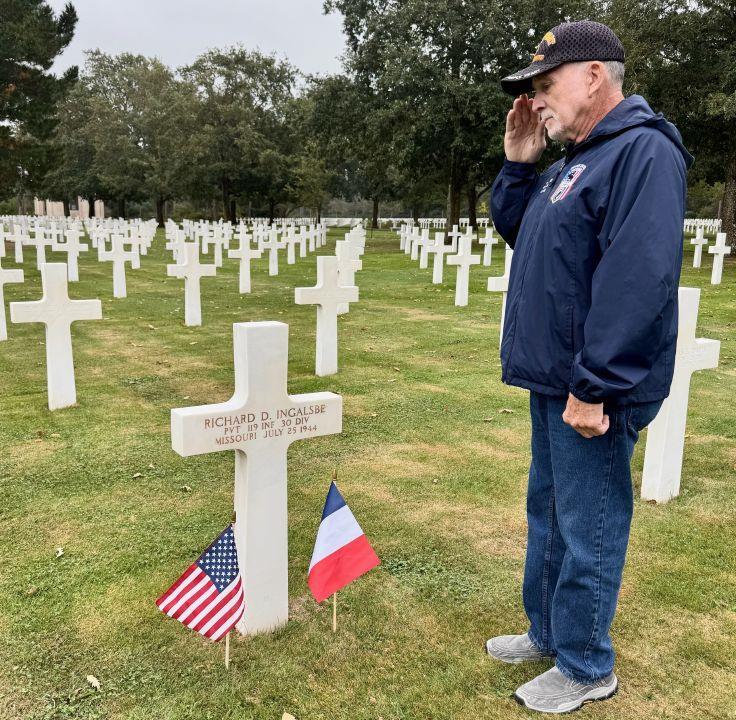
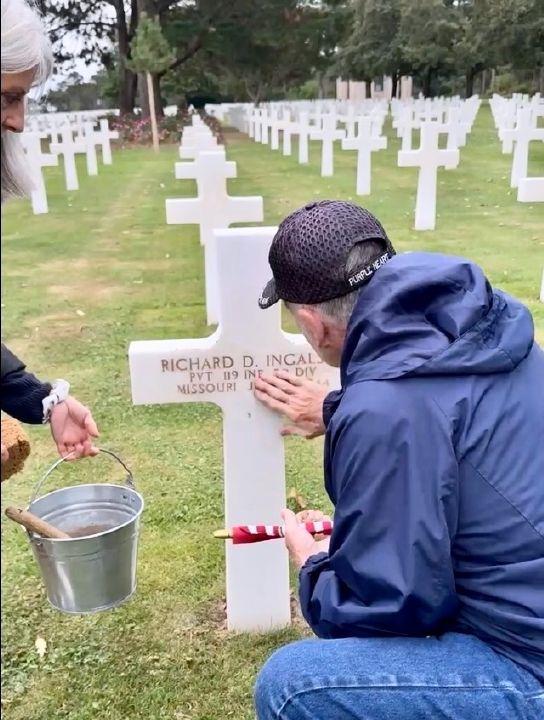
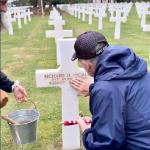
Andy Ingalsbe didn’t visit Normandy American Cemetery and Memorial for a tour of a historic landmark. He went to find an 18-year-old uncle whose death during World War II had remained part of his family’s story for more than eight decades.
Ingalsbe, of West Plains, made that journey in September, traveling with his wife, Judy, and friends Marvin and Mary Kay Ball, also of West Plains. Among the galaxy of white crosses over Omaha Beach was the grave of Richard D. Ingalsbe, who was killed in France on July 25, 1944.
The visit came during a 17-day Viking cruise aboard the Neptune, Sept. 12 through 26, from Bergen, Norway, to Barcelona, Spain, with stops in seven countries. An excursion to Omaha Beach provided Andy the opportunity to visit the cemetery he had wanted to see for years.
Located in Colleville-sur-Mer, Normandy, France, the cemetery overlooks the site where American troops came ashore on D-Day. With more than 9,000 Americans buried there and only about an hour available, the Ingalsbes said they weren’t sure they could locate Richard’s grave in time.
Judy said they eventually found a cemetery staff member who was the only representative available.
“Everybody was gone but one lady, and she said, ‘I’m the only one here today, I’ll do my best,'” Judy recalled.
The woman prepared a folder containing Richard’s information but wasn’t sure she could take them to his grave. After Judy explained how far they had traveled and asked if she could take them there, the woman produced a bucket, a shovel and two flags.
“She said, ‘Follow me,'” Judy said, recalling how the woman loaded them into a golf cart and cut through the crowd. “We just felt like we were VIPs. And she took us out, directly to where Uncle Richard was buried.”
His grave is located in Plot J, Row 17, Grave 11.
The woman demonstrated how to make the engraved lettering on the white cross readable by rubbing sand over the inscription. Andy happened to have a small container with him and collected some of the sand, as it came from Omaha Beach.
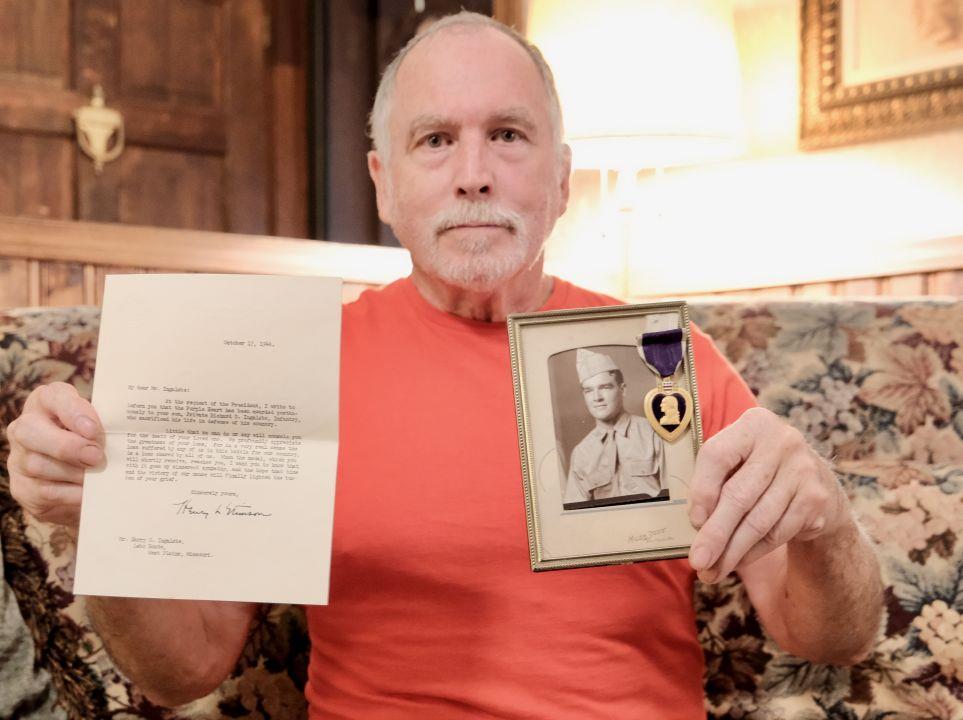
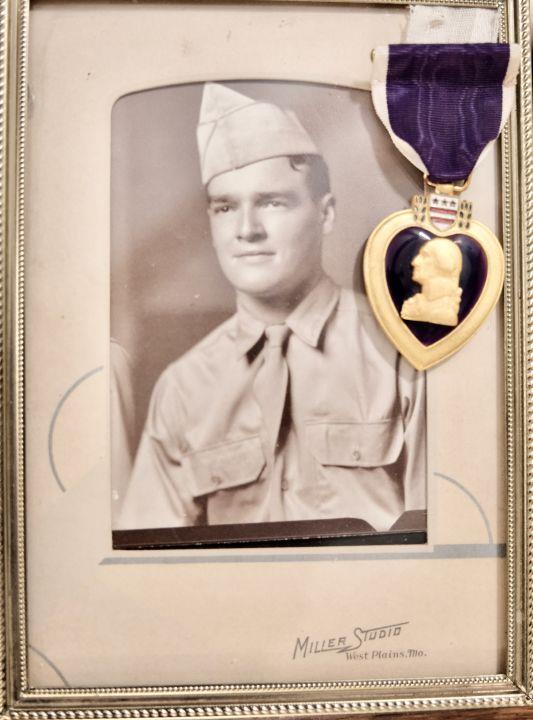
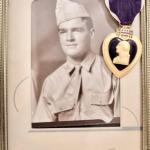
Richard served as a private in the U.S. Army’s 119th Infantry Regiment, 30th Infantry Division, and was awarded the Purple Heart. He died during the Normandy campaign on the same day as one of the deadliest friendly-fire incidents involving American troops during World War II.
On July 25, 1944, Lt. Gen. Lesley J. McNair and 110 other American soldiers were killed when U.S. bombers mistakenly dropped bombs on American positions during Operation Cobra. Nearly 500 others were wounded. The Ingalsbe family has long suspected Richard may have been among those killed by friendly fire, but the circumstances remain unverified.
Andy said his grandfather had made an arrangement with the military when Richard enlisted, believing his son would not be sent into combat. According to family accounts, that understanding was not honored.
The family received two telegrams. The first reported Richard missing in action; the second confirmed he had been killed.
His parents were devastated, Andy said. His grandfather — Richard’s father — had served in World War I and was wounded, carrying shrapnel in his body for the rest of his life.
About four months after Richard’s death, the family was asked whether they wanted his remains returned to the U.S. His parents declined because they weren’t certain the remains could be positively identified.
Andy has spent years researching his uncle’s military history, finding original Western Union telegrams and family correspondence. He said his interest grew after entering military service in 1978 and became more personal after he was wounded in Afghanistan. On Sept. 21, 2009, Andy was shot in the lower back by a sniper. He received the Purple Heart and Bronze Star for his service.
“The older I got, the more I realized and understood what soldiers go through, especially after I got shot,” he said.
The Ingalsbes also visited Omaha Beach, where American troops landed June 6, 1944. Judy recalled that rain had been forecast, but the weather held until they reached the beach.
“It was just how it was when the guys landed,” Andy said.
He said “humbling” is the best word to describe the cemetery.
“Some people just want to experience history,” he said. “I’m sure they can’t feel the same way as I do, because I’ve been in the system, and I’ve seen death and the results of war.”
Reflecting on the thousands buried there, he said many may no longer have relatives able to visit their graves.
“It’s a humbling place even if you’re just looking for history stuff,” he said. “Most of these guys may not even have family now, so there’s no one other than the cemetery to give them any attention.”